Why this isn't a normal ticket
Base Camp is not the summit
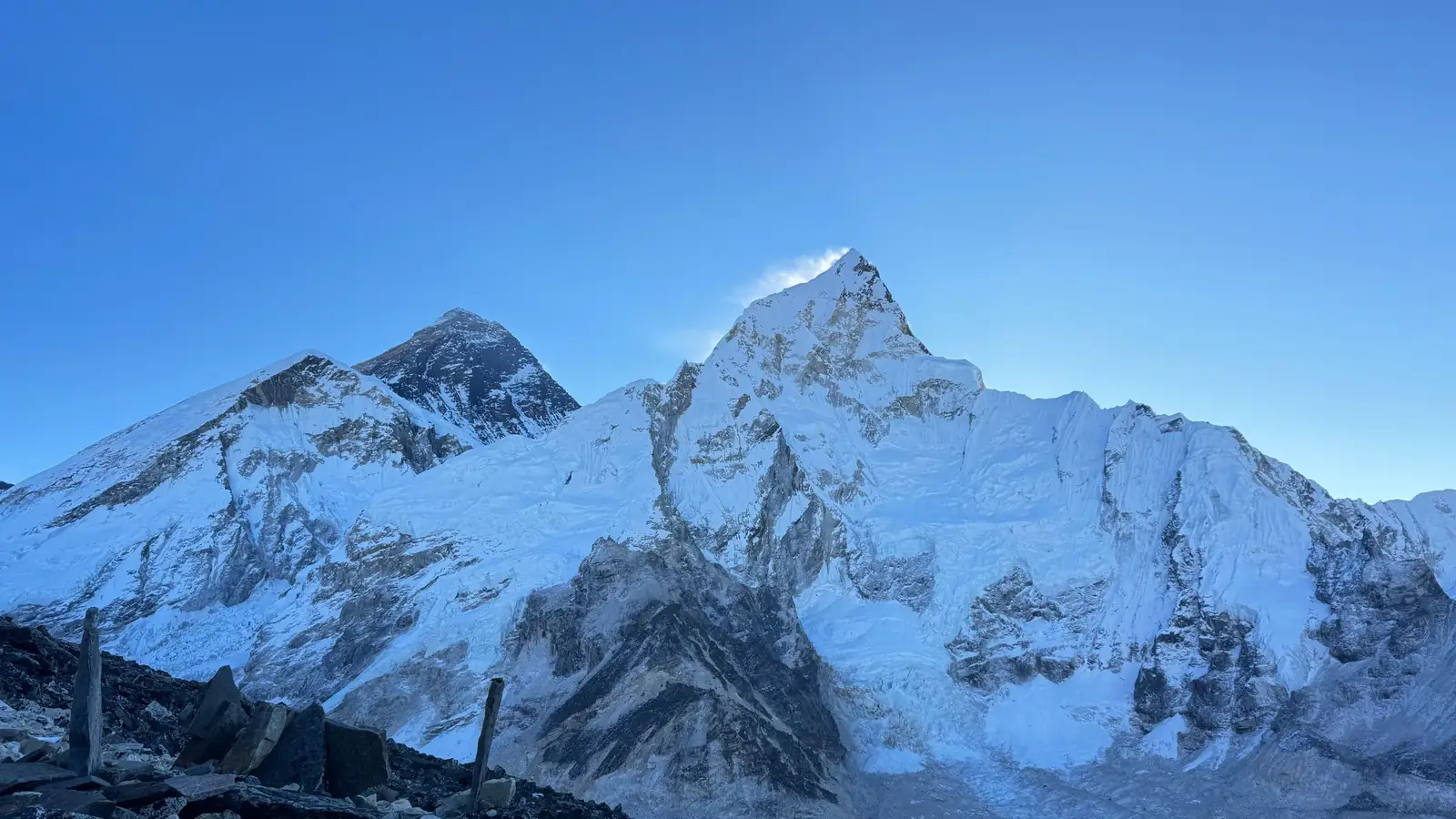
The most common misunderstanding about the Everest Base Camp trek is that it involves climbing Everest. It doesn't. Base Camp sits at around 5,364 m at the foot of the mountain, and reaching it is a walking trek — no ropes, ice axes or mountaineering skills required. What you get is the extraordinary experience of standing at the base of the world's highest peak, having walked there through the heart of the Khumbu.
Altitude, not fitness, is the challenge
You don't need to be an athlete to trek to Base Camp, but you do need to respect the altitude. The route climbs high enough that thin air affects everyone, and altitude sickness — not tired legs — is the main reason people turn back. That's why the trek is deliberately slow, with built-in acclimatisation days, and why going with a guided operator who manages the ascent sensibly matters so much.
It's a guided, high-commitment trek
The Everest Base Camp trek is a serious, roughly two-week undertaking in a remote high-mountain region, and in Nepal's national parks trekkers now go with a licensed guide, on permits your operator usually arranges. It begins with the notoriously dramatic flight to the mountain airstrip at Lukla, and unfolds as a teahouse trek up the valley. It's an adventure to plan properly, not a casual add-on.
The main ways to do the Everest Base Camp trek
The classic trek is only one option — you can add lakes, high passes, or a helicopter return. Here's how the main variations compare.
| Option | What it is | Best for |
|---|---|---|
| Classic EBC trek | The standard ~12–14 day trek up and back | Most trekkers — the definitive route |
| EBC + Gokyo Lakes | Adds the turquoise Gokyo Lakes and a high pass | More scenery and fewer crowds |
| Three Passes trek | A longer loop over three high passes | Experienced trekkers wanting a challenge |
| EBC with heli return | Trek up, fly out by helicopter | Saving days and easing the descent |
Altitude, routes & trek-planning guides
Setting the record straight
What Everest Base Camp really is
Not a climb, but a two-week trek to the foot of the mountain.
Read the guide →Compare the routes
The main ways to do the Everest Base Camp trek
Classic, Gokyo Lakes, Three Passes or a helicopter return.
Read the guide →The real challenge
Altitude and acclimatisation on the EBC trek
Why the thin air, not the walking, decides who reaches Base Camp.
Read the guide →Getting to the trailhead
The Lukla flight and getting to the trek
Kathmandu, the dramatic mountain airstrip, and building in buffer days.
Read the guide →When to go
The best time to trek to Everest Base Camp
Spring and autumn windows beat the monsoon and the deep winter cold.
Read the guide →Day to day on the trail
What the Everest Base Camp teahouse trek is like
Lodges, guides and porters, and the rhythm of the days.
Read the guide →Questions people actually ask
Do you climb Everest on the Base Camp trek?
No. The Everest Base Camp trek is a walking trek to the foot of the mountain at around 5,364 m, not a summit attempt. It requires no climbing skills, ropes or mountaineering equipment — just the fitness and, crucially, the acclimatisation to walk at high altitude over roughly two weeks. Reaching Base Camp, and often the nearby Kala Patthar viewpoint, is the goal, not the summit of Everest itself.
How hard is the Everest Base Camp trek?
The walking itself is within reach of most reasonably fit people — it's steady days of hiking rather than technical climbing. The real difficulty is the altitude: above around 3,000 m the thin air affects everyone, and altitude sickness is the main reason people don't complete it. Success depends far more on acclimatising properly and going at a sensible pace than on raw fitness.
Do you need a guide for the Everest Base Camp trek?
For the vast majority of trekkers, yes — and Nepal's rules for its national parks now require trekkers to go with a licensed guide. Beyond the rules, a guide and support team typically manage the pace, acclimatisation, permits, teahouse logistics and safety at altitude, which makes the trek both safer and far less stressful. Booking through a licensed operator is the standard and sensible way to do it.
How long does the Everest Base Camp trek take?
The classic trek typically takes around 12 to 14 days, including the flights to and from Lukla and, importantly, one or two acclimatisation days built into the ascent. Variations like adding the Gokyo Lakes or the Three Passes extend it, while a helicopter return can shorten the trip. The built-in slow pace and rest days are essential for adjusting to the altitude safely.
What is the Lukla flight like?
The trek usually begins with a short, scenic and famously dramatic flight from Kathmandu (or a nearby hub) to Lukla, whose small mountain airstrip is one of the most striking in the world. The flights are weather-dependent and can be delayed, so it's wise to build buffer time into your itinerary. It's an unforgettable start to the trek — and a reason to keep your schedule flexible.
When is the best time to trek to Everest Base Camp?
The two prime windows are spring (roughly March to May) and autumn (roughly late September to November), when the weather is most stable and the mountain views clearest. Autumn is especially popular for its crisp, clear skies after the monsoon. Winter is very cold and summer brings the monsoon's cloud and rain, so most trekkers aim firmly for the spring or autumn seasons.
- Most treks cancel free Most Everest Base Camp treks and flights on Viator let you cancel free up to 24 hours ahead. Each listing shows its exact terms before you pay
- Secure checkout Your card details go straight into Viator's checkout, never through us
- No markup from us The trek price is set by the operator on Viator — our commission comes out of that, never added to it
- Independent guide We research the options and link to current listings; we don't sell the tickets